All day
Traditionally, theory concerning reality has been conceived of as a human construct approximating some separate “physical reality.” However, several contemporary areas of research have begun to blur the boundary between our theories of reality and reality itself. One clear example of this is the recent pedagogy in the social sciences, where it is often difficult to disentangle “social reality” from a model or theory of society. For example, does bounded rationality game theory describe strategic interactions in markets, or does bounded rationality game theory actually constitute the “social reality” of markets?
This disruption of our understanding of a clear distinction between theory and the reality that the theory describes extends far below the social sciences to encompass deep, and by now, widely held disciplinary positions, from the Many-Worlds interpretation of quantum mechanics, to the anthropic principle and cosmological inflation, to the “It from Bit” school of physics, to the idea of generalized observers in adaptive systems (from natural selection to cultural evolution). And these have been extended up the physical hierarchy generating more controversial (yet highly influential) frameworks, including Simulation Theory, Constructor Theory, The Free Energy Principle, the Principle of Computational Equivalence, and many theories of reflexivity and agency that bring us back toward the recursions of the social sciences.
We seek to review these various frameworks and levels and to establish a quantitative basis (e.g. a parsimony or coherence principle) for relating them. Are there levels that have a natural rooting – what we declare as fundamental - which provides the most descriptive and predictive power if we formulate the other levels as its consequences? Is there one framework that should properly be viewed as providing the axioms from which all the others follow?
Organizers
 David KrakauerPresident + William H. Miller Professor of Complex Systems at SFI
 David WolpertProfessor at SFI; External Professor at the Complexity Science Hub in Vienna
Coordinator
 Renée TursiManager, Office of the President at SFI
Speakers
 Blaise Agüera y ArcasGoogle Research
 Vijay BalasubramanianProfessor, Physics, University of Pennsylvania
 Sean CarrollProfessor, Natural Philosophy Johns Hopkins University; Fractal Faculty + External Professor at SFI
 David ChalmersProfessor, Philosophy + Neural Science, Co-Director, Center for Mind, Brain + Consciousness, New York University
 Eddy Keming ChenAssociate Professor, Philosophy of Physics, UC San Diego
 Daniel DennettProfessor of Philosophy, Tufts University; External Faculty at SFI
 Anthony DoerrAuthor
 Marina DubovaPhD Candidate, Cognitive Science, Indiana University
 James EvansProfessor of Sociology + Director, Knowledge Lab, at the University of Chicago; External Professor at SFI
 Michael HerschComposer + Professor of Composition, Peabody Institute, Johns Hopkins University
 David KinneyLecturer, Yale University; Visiting Faculty Researcher at Google Research
 James LadymanProfessor, Philosophy, University of Bristol
 Elaine LandryProfessor + Chair, Philosophy, UC Davis
 Kerry McKenzieAssociate Professor, Philosophy, UC San Diego
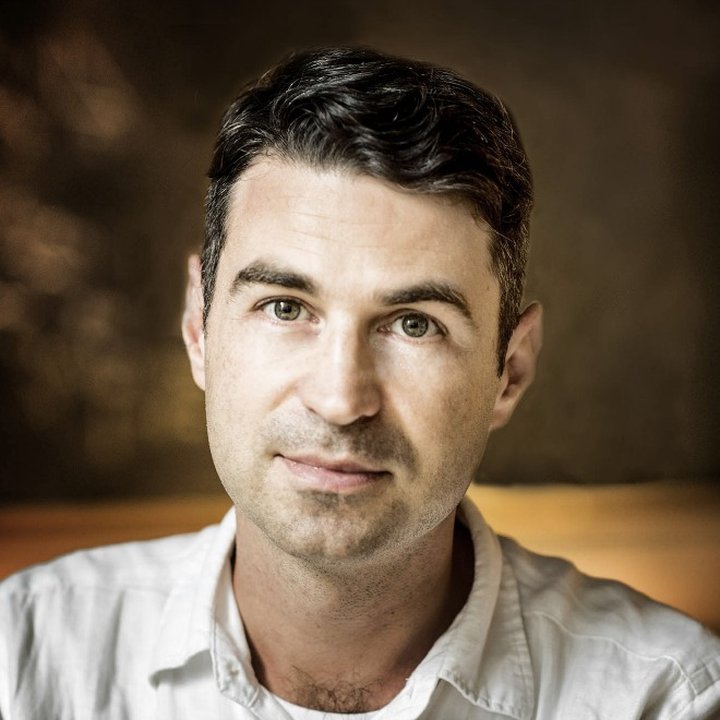 Brice MénardProfessor, Physics + Astronomy, Johns Hopkins University
 Melanie MitchellProfessor, Science Board Co-Chair + Science Steering Committee Member at SFI
 Cris MooreProfessor + Science Board Member at SFI
 Patricia PalaciosAssociate Professor, Philosophy of Science, University of Salzburg
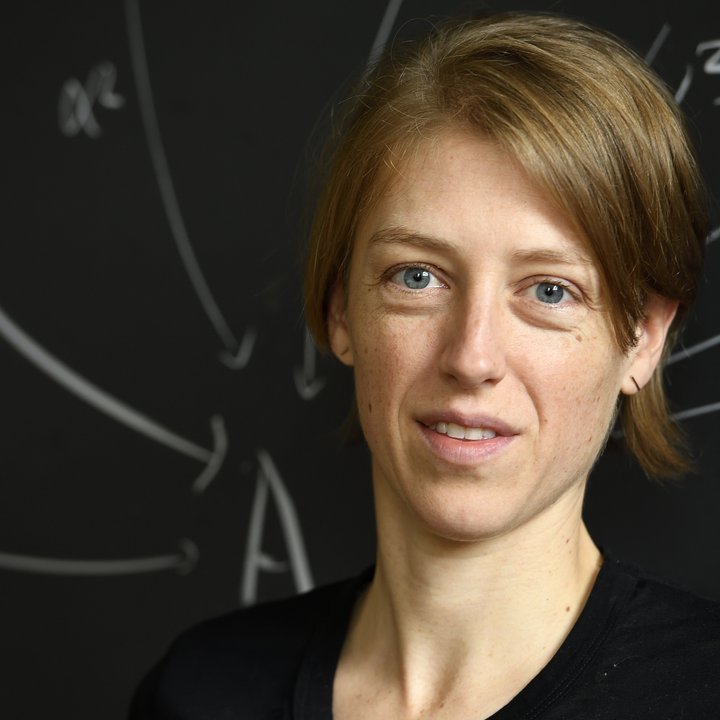 Emily RiehlProfessor, Mathematics, Johns Hopkins University
 Carlo RovelliTheoretical Physicist, Aix-Marseille Université
 David WallaceProfessor + Chair, Philosophy, University of Pittsburgh